Unalome Journal: The Art of Packing Light
There is a quiet moment before every journey, when everything you believe you need is laid out in front of you. Clothes, books, small objects, and accessories are displayed on the bed. The suitcase sits in the corner of the room, along with that frustrating sense of concern that all of it is never going to fit into such a small space… and the uncomfortable realization: “I knew I should’ve checked a bigger bag.”
You’ve probably lived this scene at least once in your life.
But can I tell you something you may not have thought about before? What if the problem was never the luggage, but the things you believe you must, at all costs, take with you?
We surround ourselves with objects—things that somehow end up carrying sentimental value… things that make us feel rooted, at home. Maybe it’s because you’ve put a piece of yourself into each one, and that makes you feel somehow full.
And so, we rely on these objects to feel complete.
But can objects really encapsulate a part of who we are? What happens when we attach ourselves to too many things, and they begin to weigh us down? And what if we were able to release some of that attachment—how would that feel?
Society has taught us that our sense of well-being and true wealth is tied to having more: more options, more layers, more things. It creates a sense of control, a reassurance that wherever you go, you will remain intact.
But somewhere between the weight of a full bag and the rhythm of arriving at your destination, something begins to loosen.
You start to notice how little you actually reach for. How many things remain folded, untouched, quietly irrelevant. How many times have you come home from a trip, opened your suitcase, and realized most of what you packed was never used?
It’s never obvious at first. Letting go happens through small realizations: the second pair of shoes you never wear, the book you thought you’d need but never open. Objects that once felt essential slowly fade into the background, and what remains is simpler, lighter—almost just enough.
This is where the practice begins.
The idea of a “2kg rule” isn’t exact. It’s not something you measure on a scale, but something you feel in your body. Think of it less as a number and more as a threshold—the point where what you carry begins to shape how you move.
It might start with a suitcase, packed with options and “just in case” items. But over time, that weight follows you into smaller decisions: what you transfer into your day bag, what you keep close, what stays on your shoulder as you move through the day.
At a certain point, the weight becomes noticeable in subtle ways. Your steps slow slightly, your shoulders adjust… You think twice before taking the longer route, before wandering without a plan, before saying yes to something unexpected. Your bag, almost invisibly, starts making decisions for you.
And sometimes, it’s your yoga mat.
Not because there’s anything wrong with it—at home, it’s part of your ritual. You go to class, you unroll it, you practice. Simple.
But in transit, it becomes something else: bulky, present, difficult to ignore. You start planning around it—where it fits, how to carry it, whether it’s worth bringing at all. The object meant to support your practice quietly begins to define its limits.
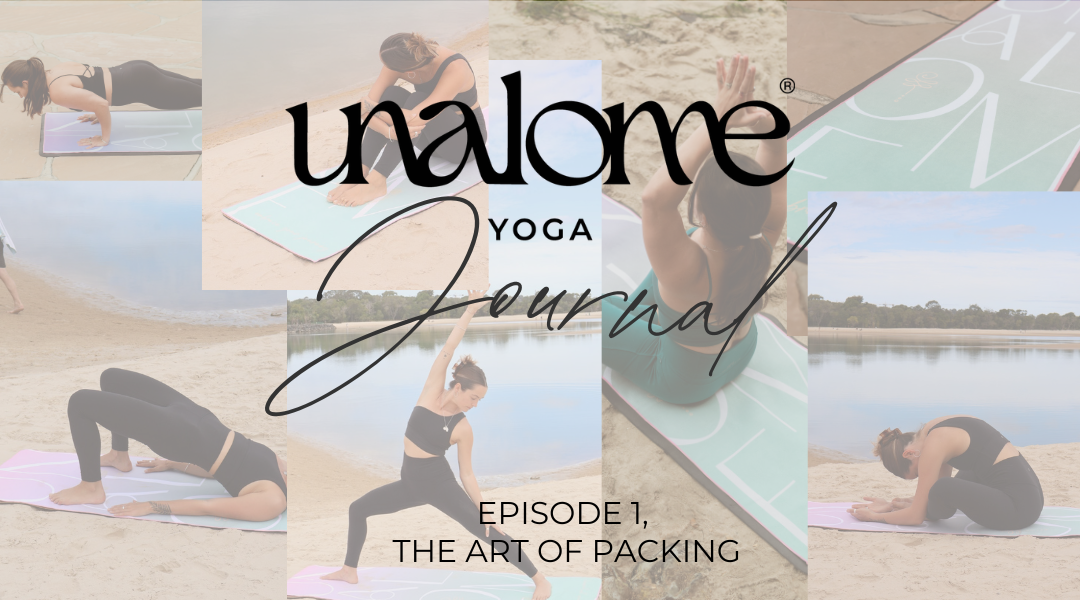
That’s when you discover an alternative: a grippy, foldable yoga towel.
Not as a replacement for the experience of a mat in your everyday routine, but as a way to stay connected to your practice while you’re moving. When traveling, the question shifts from “What’s ideal?” to “What’s possible?” And suddenly, something lighter—something that takes up almost no space—becomes enough.
At first, it feels like something is missing. A slight discomfort, like arriving somewhere without a familiar anchor.
But then something else happens.
You adapt.
You begin to notice the floor beneath you—the texture, the temperature, the imperfections. You move differently, more aware, more responsive to the space you’re in. What once felt like a compromise becomes a different kind of presence.
And in that shift, you realize: maybe you didn’t need to plan for this. Maybe you didn’t need to pack around it. Maybe all you needed was something simple—something that allows you to practice wherever you are, without the weight holding you back.
And slowly, the practice shifts.
And if you think about it, this is especially true for yoga. A practice born thousands of years ago in India, where yogis performed even the most advanced poses with nothing but the raw ground beneath their feet.
That explains everything.
Because a true practice was never meant to depend on perfect conditions, or on having everything exactly as it is at home.
The real practice exists in your body, in your breath, in your attention. It follows you—not because you carry it, but because you return to it.
A sanctuary, then, is not something you pack. It’s something you create.
It appears in small, almost unnoticed ways. A quiet corner in the morning where the light enters softly. A pause in the middle of the day, when everything else is in motion. A space on the floor that becomes enough, simply because you decide it is.
There is a deeply relieving sense of freedom in realizing this.
You begin to trust that you don’t need as much as you thought. Because in the end, comfort is not built from objects, but from familiarity with yourself. The feeling of being grounded can exist anywhere—without preparation, without weight.
Packing light is often misunderstood as restriction, as if it signals a lack of abundance. But in many ways, it’s the opposite.
It is a return—a quiet shift in perspective that removes what is unnecessary until what remains feels clear and intentional.
You keep what supports you, and release what doesn’t.
And in doing so, movement changes. It becomes easier, softer, more open. You say yes more often. You follow instinct instead of logistics. You allow space for the unexpected—for the unplanned, for the moments that could never have been packed into a bag.
There is a different kind of presence that comes with this—a strong sense of being fully where you are, rather than slightly weighed down by what you brought with you. Less divided, less distracted, simply more available.
And so, the journey itself becomes lighter.
And maybe that’s the point. Not to travel without anything, but to travel without excess—to move in a way that feels aligned, where what you carry reflects how you want to experience the world.
Not heavy, not burdened, but open to whatever life offers, and wherever it may take you.
Because in the end, the things you bring are never just things. They shape your rhythm, your posture, your choices.
And when you begin to carry less, you don’t just lighten your bag—you begin to lighten the way you move through life.
With Love,
Unalome